Pricing a new roof in New Jersey rarely comes down to one tidy number. The same 2,000 square foot Cape in Bergen County can generate very different bids compared to an identical home in Ocean County, even before you choose a shingle style. Labor markets vary, townships handle permits differently, coastal exposure pushes material choices, and the state’s building code expects winter-ready details that add cost but prevent headaches. If you have been searching phrases like roofing contractor near me or price of new roof and getting whiplash from the spread, you are not alone. The ranges below are grounded in what reputable roofing companies in New Jersey actually charge, with the variables explained in plain language.
I have walked enough attics to know that the cheapest number is not always the lowest cost. The work you do once, correctly, with the right details for our climate, almost always pays back through fewer leaks, stable energy bills, and longer life. That is the lens used here.
Why New Jersey roofs cost what they do
Start with code and climate. New Jersey towns enforce the International Residential Code with local amendments, and most inspectors expect ice and water shield along the eaves to a point at least 24 inches inside the warm wall, valleys lined with leak barriers, proper step flashing at sidewalls, and vents sized for the attic. Those are not extras, they are the minimum. The winters bring freeze‑thaw cycles and wind that will find any weak spot. Along the coast, salt air nudges you toward aluminum or higher grade fasteners and flashings.
Then consider housing stock and access. Much of North Jersey has steep, cut‑up roofs on two or three stories, with tight driveways that complicate dumpster placement. South Jersey has more low‑slope additions and ranches, but coastal jobs introduce corrosion considerations and extra wind fastening patterns. A clean, single‑layer tear‑off on a simple ranch is one thing. Two layers over a complex Victorian with turret and slate accents is another.
Labor rates run higher than the national average, and disposal is not trivial. Old shingles are heavy. Dump fees and trucking show up on your bill. Plywood costs swing with the lumber market, and code requires replacing rotten or undersized decking. Add skylights, chimneys, and solar arrays to the mix and you can see why two neighbors can both be right about what their new roof cost.
A quick price snapshot for New Jersey roofs
- Asphalt shingles, tear‑off and replace: 450 to 900 dollars per square installed. Typical total for a 1,800 to 2,400 square foot roof: 9,000 to 21,000 dollars. Standing seam or high‑quality metal: 1,200 to 2,400 dollars per square. Typical total: 24,000 to 50,000 dollars, depending on complexity and metal type. Concrete or clay tile: 1,200 to 2,500 dollars per square, plus structural work if needed. Typical total: 30,000 to 65,000 dollars on homes designed to carry the weight. Flat roofs, EPDM, TPO, PVC, or modified bitumen: 600 to 1,200 dollars per square. Typical total for a 1,000 to 1,500 square foot low‑slope section: 6,000 to 18,000 dollars. Common adders: tear‑off surcharge for multiple layers, 40 to 100 dollars per square; new plywood, 70 to 100 dollars per sheet; chimney reflashing, 400 to 1,200 dollars; new skylight, 900 to 2,000 dollars each installed.
A “square” is 100 square feet of roofing. The range reflects pitch, number of stories, access, layers to remove, penetrations, and material tier.
Asphalt shingles in New Jersey: where most homes land
Asphalt shingles still cover the majority of New Jersey homes. They strike the best balance of cost, durability, and aesthetics in our climate, especially the laminated architectural style that has largely replaced three‑tab in new work.
On price, think in layers. For a single‑layer tear‑off, new underlayment, ice and water shield at least along eaves and valleys, drip edge, starter, ridge vent, and architectural shingles, reputable bids often fall between 450 and 750 dollars per square on a straightforward one‑story ranch, and 650 to 900 dollars per square on steeper, two‑story homes with more facets. Three‑tab shingles are cheaper but less common on replacement work. Premium designer shingles with thicker profiles, longer warranties, and higher wind ratings will push higher.
Brand matters less than installation quality, but contractors in New Jersey often work with GAF, Owens Corning, and CertainTeed because their distribution networks are strong here. If you opt for a manufacturer’s enhanced warranty, expect stricter component requirements, such as matching brand underlayments and vents, and an upcharge that can be worth it if you plan to stay in the home.
A few details that protect New Jersey homes in particular stand out. Ice and water shield should extend up the roof slope far enough to guard against ice dams, not just a token strip. Valleys see the most water, so I favor a full‑width membrane plus metal flashing rather than cut‑weave shingle valleys on complex roofs. Ridge venting must pair with clear soffit intake, not just perforated vinyl hiding stuffed insulation. Without intake, a ridge vent is a slot to the outdoors with little effect.
Overlaying new shingles over old can save 100 to 200 dollars per square up front. In our climate, I generally advise against it unless the existing layer is flat, the deck is solid, and you need a short‑term solution before a full roof in a few years. Overlays hide deck problems, often run hotter, and make the next tear‑off more expensive. When buyers or inspectors see two layers, they assume deferred maintenance.
For a concrete example, a 2,000 square foot, two‑story Colonial in Morris County, two layers to remove, average pitch, one chimney, and two new vented skylights might price out around 17,000 to 22,000 dollars with architectural shingles, depending on plywood replacement and access. The same home with a simple, single‑layer tear‑off, no skylights, and easy dumpster access might come in 12,000 to 16,000 dollars.
Metal roofing: durable, handsome, and particular about details
Metal used to mean barns and boathouses. Not anymore. Standing seam roofs look sharp on farmhouses, modern infills, and coastal homes from Cape May to Sea Bright. Corrugated or “exposed fastener” panels have their place on garages and porches but are less forgiving over heated living space.
Costs vary with metal type and panel system. Galvanized or galvalume steel standing seam often lands between 1,200 and 1,800 dollars per square installed in New Jersey. Aluminum, which handles salt better along the shore, can run 1,500 to 2,200 dollars per square. Premium options like copper are in their own league. Complex roofs with hips, dormers, and many penetrations strain the high end because field forming, hemming, and flashing take time.
The underlayment package should be upgraded for metal. A high‑temperature ice and water shield under seams and along eaves prevents resin bleed and glue slip in summer heat. Many crews use a synthetic underlayment over the rest of the deck for walkability and tear resistance. Sound deadening matters too. A vented assembly or slip sheet under certain panels can soften rain noise.
Along the coast, fasteners and accessories must match the corrosion resistance of the panel. Stainless or coated fasteners reduce rust streaks. For snow country in northwest Jersey, snow guards above entries prevent sliding sheets of ice. If you are pairing metal with existing gutters, check that the drip edge geometry works; metal panels shed water differently than shingles.
Expect a metal roof to last two to three times as long as standard asphalt if detailed properly, which makes the higher upfront cost palatable for owners planning to stay. On a 1,800 square foot ranch with simple lines, a painted steel standing seam roof may price around 25,000 to 35,000 dollars. Aluminum on a coastal two‑story with a cut‑up plan can surpass 40,000 dollars.
Tile in a state built for snow and slate
Clay and concrete tile show up less often in New Jersey than in the Sun Belt, but they are by no means absent. You will see clay tile in older sections of Montclair and parts of Essex County, and concrete tile on custom homes that wanted Mediterranean lines. The cousin material in our area is natural slate, common on prewar Tudors and Colonials. While the title of this guide says tile, the price conversation looks similar across heavy, brittle, long‑lived roofing.
Weight is the first question. Clay and professional roof repairman nearby concrete tile can weigh two to four times what an asphalt roof weighs. Before you chase color charts, have a structural professional verify that your framing can handle the load. Retrofits can include sistering rafters, adding collar ties, or re‑decking with thicker sheathing. Those Price of new roof steps add cost but are not a place to cut.
Installed costs in New Jersey typically span 1,200 to 2,500 dollars per square for concrete or clay tile, provided the structure is ready. Handmade clay profiles and specialty trims sit at the top end. Valleys and hips need matching accessories, and flashings should be non‑reactive metals like copper or compatible aluminum. Underlayment is not a commodity choice here. Double‑layer underlayments or specialty tile underlayments buy you time when wind‑driven rain gets under the tile.
Ice movement matters. Unlike Arizona, we see freeze‑thaw cycles. Details at eaves and penetrations must anticipate ice creep. Heated cables are a last resort, not a default. Ask your roofer to walk you through their eave build‑up, even on tile.
If you are debating between tile and a high‑end architectural or synthetic slate lookalike, run the full life‑cycle math. A 2,200 square foot custom home might see bids from 32,000 to 55,000 dollars for genuine tile depending on profile and access, versus 18,000 to 30,000 dollars for a premium asphalt or synthetic alternative that mimics the look at lower weight. In historic districts, approvals can govern your choices.
Flat roofs across the Garden State
Low‑slope roofs show up on rowhomes in Hudson County, mid‑century moderns in the suburbs, and countless additions behind Capes and ranches. They are not the problem children of old if you choose the right membrane, insulate properly, and manage drainage.
You will most often pick among EPDM, TPO, PVC, and modified bitumen. EPDM, the black rubber many folks recognize, has a long service record and tolerates foot traffic well. TPO and PVC are white, reflective, and popular for energy reasons, though formulation quality matters. Modified bitumen, either torch‑applied or cold‑process, still shines on smaller residential sections and tricky tie‑ins.
Installed costs in New Jersey range from roughly 600 to 1,200 dollars per square, depending on membrane, thickness, number of penetrations, and how much insulation and tapered crickets you add to move water. I rarely recommend a simple membrane swap without addressing insulation and slope. Many leaks blamed on the product are really ponding problems or failed terminations at walls.
Code can trigger insulation upgrades. If you strip down to the deck over a conditioned space, your township may require bringing the assembly closer to current energy standards. That can mean adding polyiso above the deck, which also helps with condensation control. It is smart work, not fluff.
On a 1,000 square foot low‑slope addition in Monmouth County with a couple of vents and a skylight, EPDM with tapered insulation and new metal edge might price 8,000 to 12,000 dollars. TPO or PVC can be similar, with brand and installer certification nudging the range.
Line items that move the needle
Tear‑off is one. Many homes have two shingle layers. The second layer increases labor and disposal. Budget an extra 40 to 100 dollars per square for multi‑layer removal. Steeper roofs or those above two stories require more safety gear and staging, which slows production.
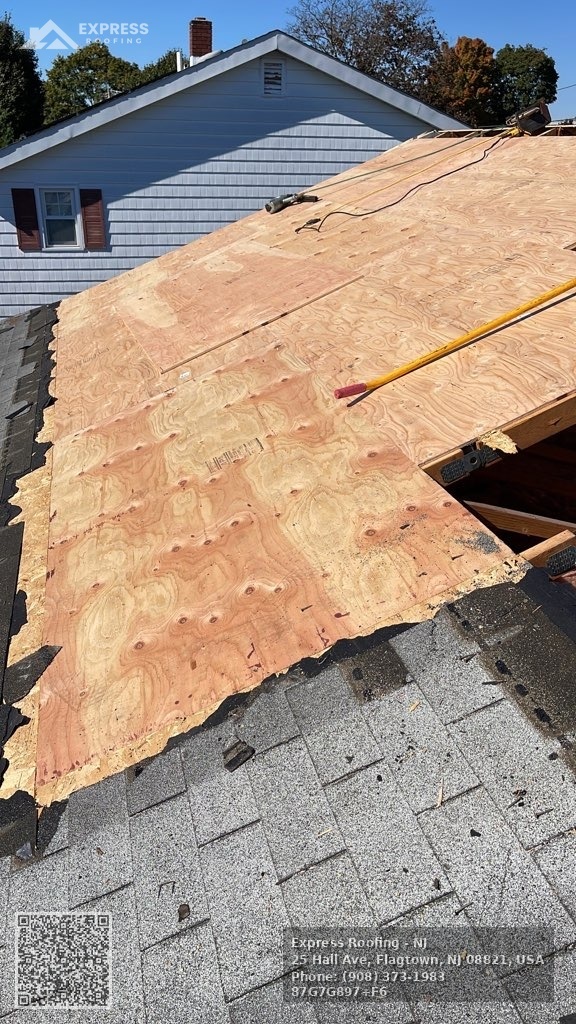
Decking is another. New Jersey’s older housing stock hides surprises. If your crew pries up shingles and finds spongy boards, they are obligated to replace them. Expect 70 to 100 dollars per sheet of plywood installed, sometimes more for tongue‑and‑groove board replacements. It is money well spent. Fastening new shingles to rotten wood is a false economy.
Chimneys, skylights, and walls deserve their own line items. Reflashing a brick chimney properly with step flashing and counterflashing can run 400 to 1,200 dollars depending on size and mortar condition. If a skylight is more than ten years old, replace it while the roof is open. The labor overlap makes it smart. Typical Velux‑style replacements land between 900 and 2,000 dollars installed, larger for ventilated or solar models. Tying into siding at dormer walls is detail work. Ask whether your proposal includes new step flashing and kickout flashings under loosened siding, not just tar.
Permits and inspections vary by township. Expect 75 to 500 dollars for permits on a typical residential project. Some towns require mid‑job inspections of the ice and water shield before shingles go on, which can add a day. If your home sits in a historic district or HOA, factor review time and possible material limitations.
Gutters and ventilation round out the picture. New roofs are a good moment to upsize gutters from 5 inch to 6 inch on long runs if you have overflow issues, and to add or balance intake and exhaust ventilation. A ridge vent without soffit intake solves nothing. Do not be surprised if a conscientious roofer talks you into baffles and added soffit vents as part of a roof replacement. It is the difference between a shingle warranty that lives on paper and a roof that breathes.
When a roof repair is the right move
Roof replacement grabs headlines, but targeted roof repair has its place. If a tree limb punched a hole over one slope, if a single valley shows age while the rest of the roof is young, or if flashing failed around a chimney, a skilled roof repairman near me is exactly what you want to search. Expect service calls to land between 250 and 600 dollars for minor leaks, more for structural issues or complex flashing rebuilds. Repairs can add years when the underlying system is sound.
Here is the filter I use. If the shingles are brittle across the field, granules coat the gutters, and multiple slopes show cupping, patching buys you months, not years. If the attic shows chronic condensation, you will chase leaks until ventilation is fixed. If your roof is at or beyond its rated life and you plan to stay, putting the repair money toward Roof replacement is usually smarter. Where I do endorse repair is on roofs under ten years old with isolated defects, storm damage to one area, or premium materials like slate and tile where section repairs are routine.
Insurance can complicate the picture. After hail or wind, documented storm damage that shortens the roof’s life may trigger coverage. Be wary of out‑of‑state crews chasing storms. Stick with established roofing companies in New Jersey who will be around for warranty work.
How to compare bids and choose the right contractor
- Verify details, not just totals. The proposal should spell out tear‑off layers, underlayments, ice and water shield locations, flashing approach, ventilation plan, and whether plywood replacement is time and materials or included up to a set number of sheets. Ask for photos. Pre‑job attic shots, mid‑job deck photos, and post‑job details help you see what you paid for, and they hold everyone to a higher standard. Match the roof to the house. Coastal homes want aluminum or better fasteners and extra wind fastening patterns. Steep, complex roofs need crews who self‑perform metal and flashing work. Evaluate warranty substance. A long manufacturer warranty without certified installation and matching components is marketing. Prioritize labor warranties from the company you hire. Check local reputation. Look for recent jobs near your town, not just a big brand name. Searches for roofing contractor near me and roof repairman near me are a start, but follow up with references and drive‑by addresses.
A good contractor will welcome these questions. If a bid dodges details, that is a red flag.
Timing, seasonality, and weather windows
Roofing runs year‑round in New Jersey, but the calendar changes the playbook. Spring fills quickly with winter backlogs and storm work. Summer heat softens asphalt, which helps seal tabs but can be tough on crews. Fall is prime time for shingles to seal before winter. Winter installs are common on sunny days when temperatures are workable, with attention to hand sealing where required by shingle instructions. If someone tells you roofs cannot be installed in winter, they have not worked here long. The real constraint is safe footing and dry decks, not the calendar date.
Material lead times matter too. Specialty metal trims and certain tile profiles can push scheduling by weeks. If you are aiming for a particular look, start the conversation early.
Three New Jersey scenarios, real‑world math
A Maplewood Tudor with slate accents and asphalt main field. The owner wants to keep the slate ridge and replace the failing asphalt. Two layers to remove, steep slopes, three chimneys, and copper valleys specified for the aesthetic. Architectural shingles with copper valleys, full ice and water shield at eaves and valleys, ridge vent with new soffit intake, chimney reflashing in copper. The bid lands around 22,000 to 27,000 dollars for 2,200 square feet. The copper detail is a discretionary upgrade that will outlast the shingles and suit the house.
A Long Beach Island raised ranch with ocean exposure. The owner is tired of shingle staining and wants aluminum standing seam. Simple roof lines but wind requirements and salt air drive the spec. High‑temp underlayment throughout, stainless and compatible fasteners, integrated snow guards over entry, and a coastal fastening pattern approved by the panel manufacturer. The bid ranges 32,000 to 40,000 dollars for 1,900 square feet. A cheaper steel panel was discussed, but the owner chose aluminum to avoid edge rust in five years.
A Clifton Cape with a flat rear addition that pools water. The owner has patched seams for years. The plan is to remove the patched modified bitumen, add tapered polyiso to create positive slope to the scuppers, and install 60 mil TPO with new metal edge and two new domed skylights. The low‑slope section is 1,000 square feet. With insulation, edge metal, and skylights, the project prices 11,000 to 14,000 dollars. The tapered package is the key. Without it, any membrane would be blamed for the next ponding‑related leak.
Permits, inspections, and working with your township
Most New Jersey towns require a building permit for roof replacement that involves sheathing work or tear‑off to the deck. Some accept a re‑roof permit if you are overlaying. Inspectors often want a mid‑roof look at the ice and water shield and underlayment before shingles go on, then a final inspection. Call your town or ask your contractor to clarify timing, especially if your attic access is tight. Expect permit fees between 75 and 500 dollars on residential projects, with historic districts or coastal zones sometimes adding review steps.
Neighbors and HOAs can slow or steer things. In planned communities, color and material restrictions are common. In older towns, noise and dumpster placement rules can affect logistics. A contractor used to your area will coordinate this; that is part of the reason to hire local rather than the lowest traveling bid from two counties away.
Roof replacement vs. Solar timing
If you are considering rooftop solar, plan the sequence. New shingles under a new array is the cleanest path. Removing and reinstalling panels to replace a roof a few years later adds cost in the thousands. Some solar installers will coordinate with your roofer to share staging and roof access. If your shingles are mid‑life and you want solar now, a targeted Roof repair and a documented roof assessment might buy you time, but be honest about the risk.
Metal roofs can be solar‑friendly with the right clamps that attach to standing seams without penetrating the panel. If you like that idea, pick panels and roofing together so the attachment system matches.
What affects insurance and resale
Insurers care about roof age and condition in New Jersey. Some carriers discount premiums for newer roofs or for impact‑resistant shingles in hail‑prone pockets, though our hail is generally less severe than in the Plains. After a full replacement, ask your agent whether documentation helps your policy. From a resale standpoint, buyers and inspectors respond to a clean, well‑documented roof with transferable warranties and photos of what is under the shingles. It can be the difference between last‑minute credits and a smooth closing.
A word on warranties and who stands behind them
Manufacturer warranties have tiers. The base shingle warranty covers material defects, which are rare and hard to prove. Enhanced systems that use branded underlayments, starter, and ridge can extend coverage and, importantly, include some labor for a period. Read the fine print on wind coverage and algae resistance. Algae‑resistant shingles make sense in our humid summers, particularly under trees.
The contractor’s workmanship warranty is just as important. A ten‑year labor warranty from a company that has been in your county for twenty years beats a lifetime promise from a pop‑up crew. Ask who returns if a leak shows up at year eight and whether service calls are handled in house. Local roofing companies in New Jersey live on reputation. The ones you want will have a trail of satisfied clients you can call.
Preparing for quotes without wasting weeks
- Gather roof basics. Square footage if you know it, number and type of skylights, known layers, and any history of leaks by location. Photos of the attic help. Decide what you value. Longevity, look, upfront cost, warranty strength, or lowest maintenance. Share that with bidders so they price the right system. Ask each bidder to price the same scope, then invite alternates. For example, base price for architectural shingles with an alternate for standing seam on the front porch. Schedule when you can be home for the walk‑through. A good estimator reads details you will not spot and prevents change orders. Clarify clean‑up and protection. Landscaping, pools, and attics collect debris. The best crews tarp, magnet sweep, and vacuum where they worked.
This small prep makes your Roofing contractor near me searches more productive. It also signals to quality contractors that you will be a good partner, which can affect scheduling during busy seasons.
Bottom line on the price of a new roof in New Jersey
The new roof cost you pay should match the house, the climate, and your plans. For most homeowners, asphalt architectural shingles deliver strong value at 450 to 900 dollars per square installed when the job includes proper tear‑off, underlayment, flashing, and ventilation. Metal earns its premium on homes where longevity, look, or coastal conditions make sense. Tile is a specialty choice that requires structure and the right crew. Flat roofs reward those who invest in slope and terminations, not patch kits.
If your bids sit at the extremes, look past the total and into the scope. Does the cheaper number include full ice and water coverage where needed, new step flashings under loosened siding, and a real ventilation plan, or is it betting you will not see what is under the shingles? Does the higher number invest in things you value, like upgraded underlayment, ridge accessories, or a stronger warranty?
There is a reason the smartest homeowners in the state keep the phone numbers of two or three trusted roofers. Whether you need quick Roof repair after a storm or a full Roof replacement, having a relationship saves time and money. If you are just starting and typing roof repairman near me into your browser, focus on local experience, clear scopes, and photos before, during, and after. The price of a new roof in New Jersey is a big number, but with the right plan, it does not have to be a gamble.
Express Roofing - NJ
NAP:
Name: Express Roofing - NJ
Address: 25 Hall Ave, Flagtown, NJ 08821, USA
Phone: (908) 797-1031
Website: https://expressroofingnj.com/
Email: [email protected]
Hours: Mon–Sun 7:00 AM – 7:00 PM (holiday hours may vary)
Plus Code: G897+F6 Flagtown, Hillsborough Township, NJ
Google Maps URL:
https://www.google.com/maps/place/Express+Roofing+-+NJ/@40.5186766,-74.6895065,17z/data=!3m1!4b1!4m6!3m5!1s0x2434fb13b55bc4e7:0xcfbe51be849259ae!8m2!3d40.5186766!4d-74.6869316!16s%2Fg%2F11whw2jkdh?entry=tts
Coordinates: 40.5186766, -74.6869316
Google Map Embed
Social Profiles
Facebook: https://www.facebook.com/expressroofingnj
YouTube: https://www.youtube.com/@ExpressRoofing_NJ
X (Twitter): https://x.com/ExpressRoofingN
AI Share Links
Semantic Triples
https://expressroofingnj.com/
Express Roofing NJ is a affordable roofing company serving Somerset County, NJ.
Express Roofing NJ provides roof maintenance for residential properties across nearby NJ counties and towns.
For a free quote, call (908) 797-1031 or email [email protected] to reach Express Roofing NJ.
Connect on Facebook: https://www.facebook.com/expressroofingnj and watch project videos on YouTube: https://www.youtube.com/@ExpressRoofing_NJ.
Follow updates on X: https://x.com/ExpressRoofingN.
Find the business on Google Maps: View on Google Maps.
People Also Ask
What roofing services does Express Roofing - NJ offer?
Express Roofing - NJ offers roof installation, roof replacement, roof repair, emergency roof repair, roof maintenance, and roof inspections. Learn more: https://expressroofingnj.com/.
Do you provide emergency roof repair in Flagtown, NJ?
Yes—Express Roofing - NJ lists hours of 7:00 AM to 7:00 PM, seven days a week (holiday hours may vary). Call (908) 797-1031 to request help.
Where is Express Roofing - NJ located?
The address listed is 25 Hall Ave, Flagtown, NJ 08821, USA. Directions: View on Google Maps.
What are your business hours?
Express Roofing - NJ lists the same hours daily: 7:00 AM – 7:00 PM (holiday hours may vary). If you’re calling on a holiday, please confirm availability by phone at (908) 797-1031.
How do I contact Express Roofing - NJ for a quote?
Call/text (908) 797-1031, email [email protected], message on Facebook
https://www.facebook.com/expressroofingnj,
follow on X https://x.com/ExpressRoofingN,
or check videos on YouTube https://www.youtube.com/@ExpressRoofing_NJ
Website: https://expressroofingnj.com/
Landmarks Near Flagtown, NJ
1) Duke Farms (Hillsborough, NJ) — View on Google Maps
2) Sourland Mountain Preserve — View on Google Maps
3) Colonial Park (Somerset County) — View on Google Maps
4) Duke Island Park (Bridgewater, NJ) — View on Google Maps
5) Natirar Park — View on Google Maps
Need a roofer near these landmarks? Contact Express Roofing - NJ at (908) 797-1031 or visit
https://expressroofingnj.com/.